This page compares product categories, but it does not verify one exact marketplace listing. Treat the cards below as prompts for label checking, not as rankings or buying advice.
What resistance bands are and how they relate to PCOS
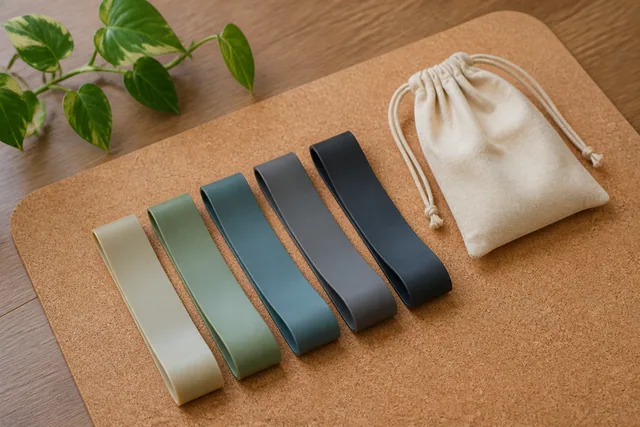
Resistance bands are rubber loops or elastic tubes that provide resistance when stretched, used for strength exercise at home without metal weights. A set usually comes with several resistance levels so you can start light and build up gradually.
For someone living with PCOS, regular movement is one of many things often discussed as part of overall lifestyle. Resistance bands are one option for movement, not a requirement and not a treatment for PCOS. Walking, swimming, bodyweight exercise, or other activities are also options. Resistance bands do not treat PCOS and do not replace medical advice; they are simply one way among many to move at home.
What this comparison can and cannot do
It can help you ask better questions: what is the active ingredient, what dose is on the label, what warnings are shown, whether MAL or NOT registration is relevant, whether halal proof exists, and whether the seller page is clear enough to trust.
It cannot prove that a product is genuine, current, halal, registered, safe for your medicines, or suitable for pregnancy, breastfeeding, fertility treatment, diabetes, thyroid disease, liver disease, kidney disease, mood conditions, or blood-thinner use. Those checks need the real label and professional advice where relevant.
How the set options differ
Different resistance band sets differ in material, whether latex or latex-free, the number of resistance levels, whether handles, a door anchor, or ankle cuffs are included, and the quality of stitching or fittings. Some sets are closed loops, while others are long tubes with handles.
What every set can provide is different resistance for exercise. What none of them can provide is a guarantee of a health outcome, or suitability for your body without thought. For people with a latex allergy, the material is an important consideration. Bands can also wear out or snap over time, so durability and the condition of the rubber matter for safety. The difference between sets is more about material, durability, and ease of use than one set being more effective for PCOS than another.
Option to check
Products to check
How to compare safely
Start with your goal. A product for cravings, acne, hair, sleep, ovulation, or glucose risk should not be judged by popularity alone. Write the decision you need: whether to ask for a blood test, whether a supplement could interact with medicine, whether to wait until pregnancy status is clear, or whether the label is too vague.
Then compare proof. Save the exact product URL, label image, dose per serving, serving size, inactive ingredients, capsule material, seller name, expiry or batch details if shown, and any MAL or NOT number. If one page mixes several variants, compare the exact variant you would receive.
What not to assume
Check the real label, dose, seller, halal certificate, and registration before buying, and choose a product whose details are clear.
Do not combine products just because both appear in PCOS content. Combining glucose-active supplements with diabetes medicine, fertility treatment, thyroid medicine, hormonal treatment, blood thinners, psychiatric medicine, or pregnancy can change the risk conversation.
What to think about before buying
Consider cost against durability. A cheap set may use rubber that wears out quickly, while a sturdier set may last longer. Think about the material, especially if you have a latex allergy, and whether the set is easy to store and clean. Check too whether the resistance levels included suit your current level, because resistance that is too strong can cause injury.
Consider as well whether resistance bands genuinely suit you, or are just one of several options. Some people prefer walking or other activities that need no purchase at all. No single tool is required for movement, and an option you enjoy and keep up usually matters more than a particular piece of equipment.
The Malaysia angle on sellers and product safety
Although resistance bands are not a medical device, it is still worth checking the seller and the product quality. Look for material information, whether there is a safety-standard mark, and reviews about durability. A legitimate seller is usually clear about material and resistance levels. If a seller is vague about the material or makes large health claims, that is a question to weigh before buying.
Safety while using a band
Rubber that is worn, cracked, or faded can snap suddenly when stretched, and a band that lets go can whip back at a hand or face. That is why it helps to check the condition of the rubber before each session and replace any band that shows signs of wear. Check the handle joins and door anchor too, because loose fittings are the point that most often fails. Band exercise is safest when started with light resistance and controlled movement, not a strong pull at a speed that is hard to control.
Material and latex allergy
Many resistance bands are made from natural rubber latex, which can trigger a reaction in people with a latex allergy. If this applies to you, look for a set marked latex-free, usually made from a synthetic rubber such as TPE. Do not assume a set is latex-free just because it looks different; check the material description on the seller page and ask if it is unclear. Material also affects smell, durability, and feel against the skin, so it is a practical consideration and not only an allergy issue.
What to discuss with a professional
Resistance bands do not treat PCOS, and no single tool is required for movement. If you have a health condition, an old injury, high blood pressure, or you are pregnant, it helps to discuss it with a doctor or a fitness professional before starting a new routine. They can help choose movements that suit your body and current fitness level. A movement option you enjoy and can keep up over the long term usually matters more than a particular piece of equipment, whether that is bands, walking, swimming, or another activity.
Resistance bands are an optional tool, not a requirement
It is worth remembering that resistance bands are one optional tool, not something required for PCOS. They are simply one way among many to move. Some people enjoy band exercises, while others prefer walking, swimming, or other activities. What suits your body is most appropriately discussed with a doctor or a fitness professional if you have a particular health condition.
A practical next step
Choose one option to discuss, not a bundle. Bring the label to a pharmacist or doctor and ask: is this category relevant to my goal, does it overlap with my medicines, what side effects should I watch for, and when should I stop or review? For the wider process, read how to check PCOS supplements and what PCOS and PMOS mean.